One’s Legacy before Retirement

itcphmain • July 26, 2017

Service shares a common feeling of kindness, novelty, intelligence and passion. Serving others is one to be proud off. It is a positive energy that flows thru one and passed onto others. Serving is giving.

There is no requirement for one to serve. It is something that is innate. It is not to be provoked.
Given 35 years in service and still counting, a Professor makes a dramatic exit upon retirement.

Changing Lives through Teaching

Students are her everyday vitamins. Trainings are her supplements. Family is her inspiration. Teaching keeps her going. These are the essentials of a Professor.

Four more years, Dr. Lydia P. Libunao, PhD, is decided to leave the academe. The Don Mariano Marcos Memorial State University (DMMMSU) Bacnotan Campus was her second home. Expecting nothing in return, she was able to change lives through teaching.

Learning how to process pork, a family was transformed. The Basic Meat Processing Course back in 2004 was her first training in the International Training Center on Pig Husbandry (ITCPH). This made a huge impact on a student, and it became a source of income. Janice, back then was Ma’am Lydia’s second-year college student. From delivering fresh pork around the community, her mother now sells processed products. Among these are tocino, longganisa, and embutido.

Ingredients, procedures and packaging these processed products were learnt from the Center. “Proven na maganda, walang spoilage and accepted ng mga customers,” the Professor stated. Ever since, Ma’am Lydia teaches subject on Meat Processing in the University. After her training from ITCPH, she required second-year students enrolled in Bachelor of Science in Agriculture to produce a kilo of any processed product. This helped them acquire skills on entrepreneurship.

Targets were Set

Eager to learn more, the Professor was back in the Center in 2005. This time, she stayed in ITCPH for two months. Prof. Lydia is the Project Manager of North La Union Campus Piggery Project. She was in-charge of the five-sow level farm. The normal operations of the farm continued until the National Trainer’s Course on Pig Husbandry.

“Nung wala pa akong training, wala akong iniisip na mga targets,” said the Professor. The subject on stock projection was her vantage point. This subject teaches pig raisers how to increase the number of pigs for succeeding years. Learning the production cycle of sows, was a challenge to her. However, she was being equipped to further increase the performance of the farm.

In her excitement to apply her learning from the Course, the Piggery Project rose to 15-sow level. More than these, a net income of half a million pesos was declared. This was a first for them especially in the Extension Services Department. Money was used in the construction of a farrowing building. A total of 10 farrowing crates or ‘sampung paanakan para sa baboy’ were purchased.

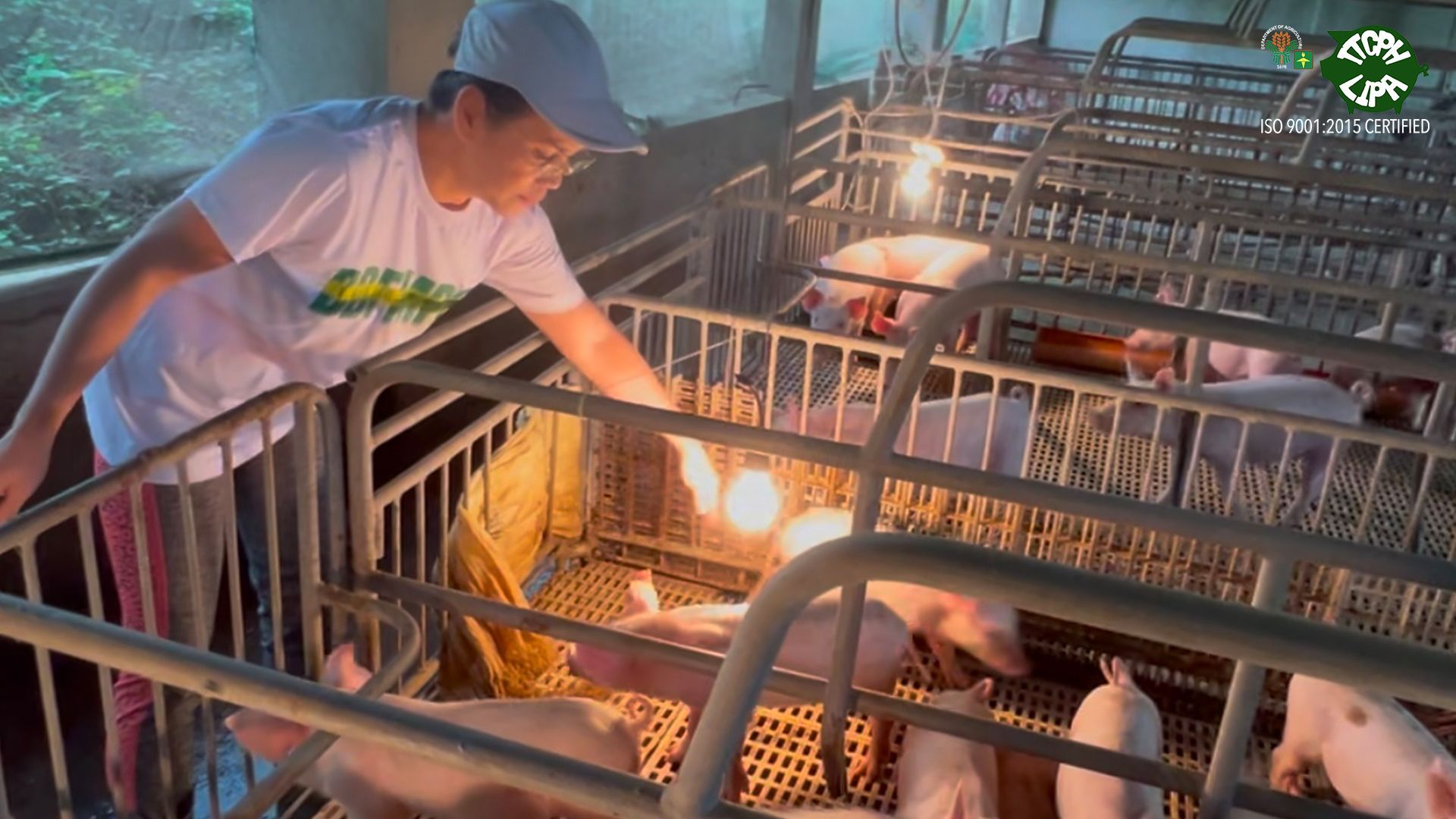
“Ang paanakan namin before ay sa floor lang,” shared Prof. Lydia. She learned the benefits of an elevated farrowing crate. It eliminates the spread of diarrhea since piglets’ manure passes through. Aside from this, there is additional ventilation for piglets.

Ma’am Lydia is an Animal Science major. During college, they were thought of piglet castration the traditional way. “Nung nag college ako, may taga hawak kami tuwing castration,” she narrates. It was in ITCPH where she learned how to castrate piglets alone. Aside from this, piglet processing and cutting of umbilical cord too were her first time during the training.

DMMMSU’s Piggery Project is now a 20-sow level farm. It serves as a training ground for students’ practicum. After piglet processing, piglets are sold while some are left for fattening. Their farm supplies raw pork to the University Fast Food Center.

All of these paid off. Prof. Lydia was an outstanding awardee. In 2005 she became the first Income Generating Project (IGP) Manager of the Year, University level among 49 IGP managers. Sharing her knowledge and skills, her care taker received an award too.

She made major contributions after attending trainings in ITCPH. Consequently, she was designated as the Dean of the College of Agriculture.

The Dean

Prof. Lydia looks forward to establish an Artificial Insemination (AI) Center in DMMMSU. Semen processing will then be accessible to clients.

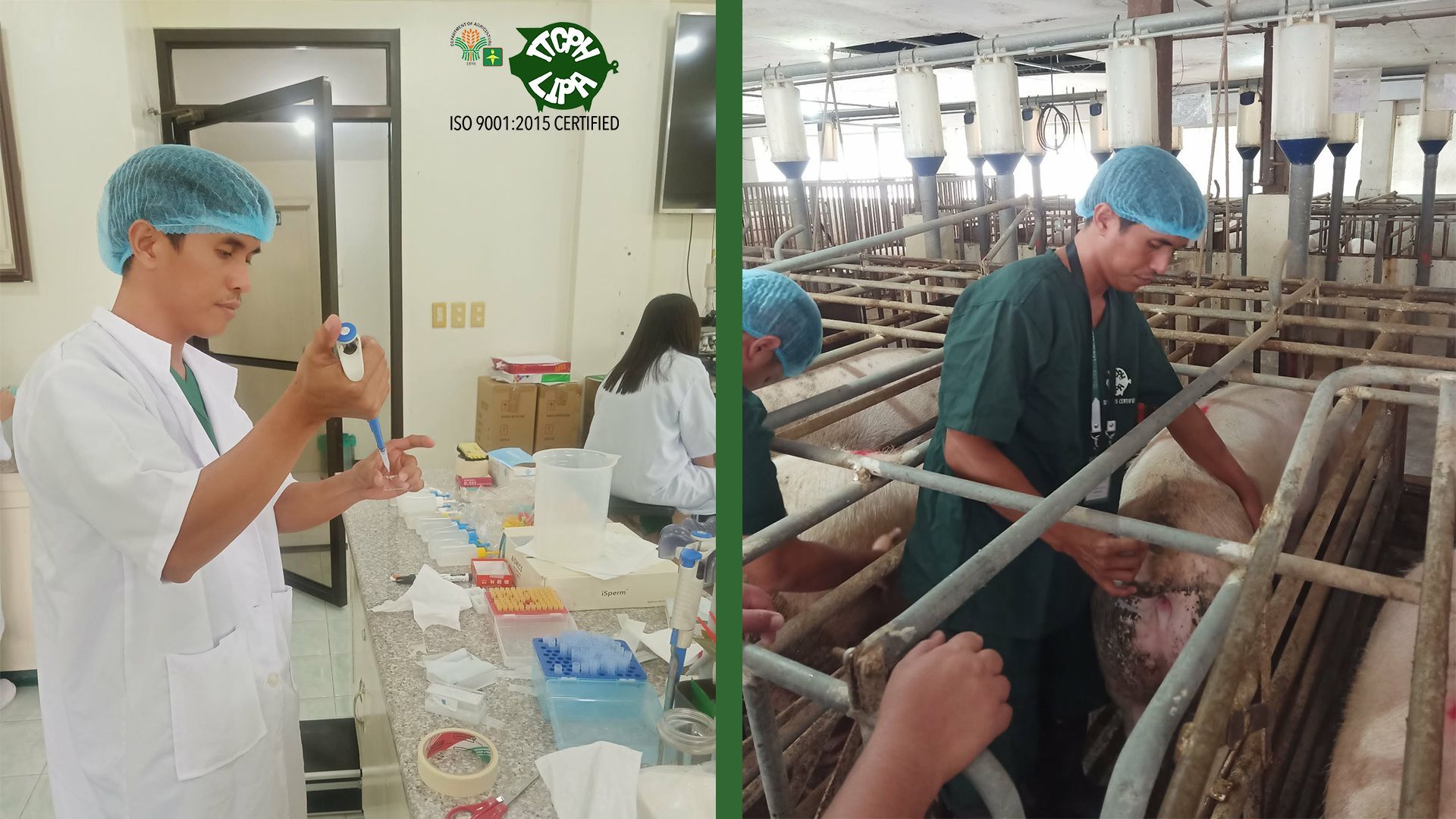
Her third training at the Center was the National Trainer’s Course on AI. Having a Masters of Science (MS) in Dairy Science, it was her first time to befriend a boar. Today, students are able to train a boar, collect semen and inseminate female pigs.

Her goal is to produce skilled graduates on AI. “Kasi after graduation, they will be technicians,” said the Dean, once an AI Center is established.

Her hopes for the success of DMMMSU shines. Value-adding and processing are her priorities. More than producing quality graduates and faculty, the importance of the value chain becomes a necessity. “Four years na lang, I will be retiring,” she smilingly says. Before retirement, she aims to mentor a potential manager for the Piggery Project.

Maintaining a good ground is a challenge. Happy with what she does, she continues to inspire others. “Dr. Lydia Libunao is an epitome of an expert in swine production. She is the person behind the success of DMMMSU NLUC Piggery Project. Being an academician, her expertise has transpired to numerous people in line with swine farming,” says Dr. Greg, one of her faculties in the College and hopefully the next one to be sent in ITCPH.

Service wrapped with love and passion becomes a legacy to behold with. A legacy that will be treasured in the hearts and minds of Ma’am Lydia’s family in the academe and the community she was able to transform.

Refuse to be ordinary.

Make your own legacy...

#ITCPHway #LearningByDoing
By ITCPH December 9, 2025
“Noong pandemic, na-inlove ako sa cooperative kasi ang ganda-ganda, very transparent, autonomous, at tinatangkilik ang agriculture” – Riza. Rizalina P. Fortes, a wife and mother of three, began her humble career in pig farming through a series of unintentional incidents. Capable of starting a pig business, Riza and his husband set out to build a 300-finisher capacity farm in Taysan, Batangas, as a possible source of additional income. Ironic as it may seem, the farm did not materialize. “Never namin nalagyan ng baboy yung building” , Riza adds. Several piglets are sometimes placed as payment for the services rendered by his Attorneyhusband. “Minsan bayad piglets from Bulacan, pero hindi nagsu-survive, nagkakandamatay" , she narrates. Hopeful to turn the pig business into a successful venture, Riza, also shared a good amount of investment with a local feed supplier, even getting a spot as a member of the audit committee. From this, she took off to a higher stage. During the pandemic, she had the luxury of time to attend seminars. This was an eye-opener for Riza, and a turning point at the same time. “Doon ko nalaman na andami palang government grants for pig raisers” , she shares. Eyeing the 5-million INSPIRE Program Project, Riza sought help in Barangay Piña, Taysan, Batangas. However, farmer organizations in the area were no longer functional. “Mahirap kasi talaga doon sa amin, walang pang sustain ang farmers, sa feeds, even sa pambayad sa artificial insemination” , says Riza. “Bakit hindi na lang ikaw ang gumawa ng kooperatiba, kasi wala pa nito sa atin?” , the Barangay Chairman responds. Determined to be a recipient of the INSPIRE Program Project – a government-led initiative to rebuild the swine industry from the devastating effects of African swine fever by supporting LGUs, cooperatives, and pig producers with biosecure facilities, modern technology, training, and capital for hog repopulation, Riza founded the Piña Taysan Agriculture Cooperative (PITAC) in 2022. While working to strengthen the cooperative’s core values and functions, she also participated in training at the ATI-ITCPH. Two years later, PITAC finally received a 10-million project (300-finisher building) under the Department of Agriculture – Regional Field Office CALABARZON. During the construction of the building, Riza was at the ITCPH attending her 5th and 6th courses, the National Trainer’s Course on Pig Husbandry, and the National Trainer’s Course on Animal Waste Management and Utilization. “Ito yung time na kino-construct yung INSPIRE sa amin, very timely kasi nababantayan ko according to standard” , Riza happily shares. Riza serves as the General Manager of PITAC. From merely 18 pig farmers, the cooperative grew to 121 members, with half as pig producers and the other half as investors. Their (personal) empty pig pens are also transformed into a functional space for PITAC members. Currently, it houses 10 sows, 40 piglets, and 150 finishers. “Yung hindi namin nagagamit dati na mga kulungan, doon naglalagay ng baboy yung ibang members ng PITAC” , Riza adds. Knowing the challenges faced by fellow pig raisers, Riza, ensures that the smallholders earn a profitable business. In partnership with a local feed supplier, GM Riza safeguards the feed capital through a loan once the hog market has concluded. “Unang goal ng PITAC is to supply feeds as pautang sa pig farmers” , she explains. Now that feeds have been secured, new challenges have cropped up, such as the market for finishers. As a solution, PITAC buys the marketable hogs. To avoid further losses, haulers were welcomed to join the cooperative as members. Pigs classified as slow growers are processed into tapa, tocino, and longganisa. Through value-adding, patronage, and refund schemes, members enjoy benefits. From zero-knowledge in pig farming, Riza embraced the beauty of swine. Knowledge gained from the training is being disseminated through a Pre-membership education seminar (PMES) for interested individuals to join the cooperative. Members also practice ethnoveterinary medicine, using locally available plants to prevent disease and some as topical ointments for open wounds. Working with the community has had a significant impact not only on Riza but also on the smallholder pig raisers in Taysan. “Pag may tulungan, lumalago ang negosyo” , she stressed. Today, Riza enjoys the company of fellow pig raisers while seeing the progress she has made in their lives. #ITCPHway #LearningByDoing
By ITCPH November 26, 2025
"Sa kasalukuyan po mayroon na kaming 1,194 na produkto ng INSPIRE Project. May karagdagan pa po na 42 heads na ilalabas ngayong December. Kung susumahin po ay nasa 1,236 which is 106% na ng accomplishment ng Tilambo Multipurpose Cooperative." - Gregorio U. Culla Jr., General Manager, Tilambo Multipurpose Cooperative The Tilambo Multipurpose Cooperative (Tilambo MPC) in Taysan, Batangas, is a farmer group that offers various services to its members, including savings and deposits, lending, rental and catering services, a fuel refilling station, a water distribution system, and agricultural services. Established in 1997, the cooperative is now consists of 1798 members. In 2022, Tilambo MPC started a 300 Finisher Production, Community-based swine farm. This is part of the Department of Agriculture’s (DA) commitment to rebooting the swine industry through the National Livestock Program (NLP) and ATI-ITCPH. This 5-million-peso project includes the establishment of farm buildings, a farm office, feed storage, a biosecurity area, a waste management facility, and the provision of farm equipment. The Project aims to produce and promote good quality meat in the market, adopt modern facilities with climate-controlled systems and biosecurity, provide a venue for training, extension and learning of farmers, students, and interested individuals, support the DA and other government agencies’ swine-based livelihood programs by producing adequate and quality meat to supply these program’s needs, and provide an additional source of food and income to the farmer members. "Ang INSPIRE project po ay tumulong sa pagsu-suply ng pork meat sa merkado, dahil yun po ang isa sa mga layunin bilang isang swine multiplier farm. Iyun pong naha-howl na mga fatteners, yun po ang sinusuply sa merkado." - Gregorio U. Culla Jr. Three years after its inauguration, the Tilambo MPC produced a total of 1236 fatteners. It exceeds the 1,164 target. Given the value of animals supplied to the local market, the 106% success rate covers the full investment cost of the Department of Agriculture-National Livestock Program. Likewise, as a techno-demo farm, the project has successfully operated a modern facility with climate-controlled systems and biosecurity and provided a venue for training, extension, and learning for farmers. "Dito sa aming kooperatiba, halos lahat ng myembro ay nag-aalaga ng baboy. Marami ang naitulong ng proyektong ito. Unanguna, yung sa kinita namin, nakabahagi ang mga kasapi, nakapagpapa-iwi na din kami sa mga kasapi kapag sumosobra ang biik. Nakaka-attend kami ng mga pagsasanay, at natututunan ang tamang sistema ng pagaalaga ng baboy. Ilan lamang ito sa mga naitutulong ng proyekto sa pamamagitan ng ITCPH." - Mr. Crispin U. Berana, Chairman of the Board, Tilambo MPC Tilambo MPC still plans to strengthen its operations through the adaptation of the latest technology in pig farming, enhanced facilities, continuous capability building, and strict implementation of biosecurity practices. "Sa mga kooperatiba na gusto pong mag-venture sa pagbababuyan, kayo po ay makipag-ugnayan sa mga LGU at ahensya ng DA, tulad ng ITCPH, para sa maayus at epektibong mga proyekto. Kahit na may alam na kayo sa pag-aalaga, sa tulong ng ITCPH, magkakaroon kayo ng magandang training, at mabibigyan ng tamang kaalaman sa pamamahala ng babuyan." – Mr. Gregorio U. Culla Jr. In a nutshell, the Tilambo Multi-Purpose Cooperative (Tilambo MPC) has proven its leadership in agriculture by exceeding the Php 5 million target of the DA-INSPIRE Project, achieving 106% and supplying 1,236 fatteners to the local market. Beyond production success, this initiative established a modern technodemo farm featuring climate-controlled and bio-secured facilities, directly benefiting its 1798 members through profit-sharing, livestock livelihood programs (paiwi), and continuous training in proper hog raising systems. "To promote resiliency, the cooperative will continue collaborating with ATI-ITCPH and related government agencies to gain access to superior training and technical skills, fostering a sustainable approach to their purpose." – Mr. Gregorio U. Culla Jr. Moving forward, Tilambo MPC remains committed to using the latest technology and implementing strict biosecurity measures, ensuring its mission to supply safe and nutritious pork and to strengthen its community's livelihood. #ITCPHway #LearningByDoing
By ITCPH October 14, 2025
"Kapag mabango at matamis-tamis ang amoy ng Lactic Acid Bacteria (LAB) serum, lalo na sa natural na pagbuburo (fermentation) tulad ng sa Korean Natural Farming, ay tumutukoy sa mga senyales ng matagumpay na proseso ng paggawa at wastong pag-iimbak nito." Mr. Guillermo “Gil” Z. De Castro is one of the owners of Gil Integrated Farm and Training School, Inc., located in Rizal, Majayjay, Laguna. The farm is a DA ATI- Learning Site for Agriculture and a TESDA-accredited Farm School. In 2024, he completed the course Sustainable Pig Farming – Lactic Acid Bacteria Serum (SPF-LABS). Attending this course provided him with benefits, including a solid scientific foundation combined with practical operational skills. In his previous career, Gil served as a manager in an international bank. However, due to the COVID-19 pandemic, he decided to manage his family-owned farm and training school. "Noon, sabi ng parents ko, ang hawakan daw namin ay papel at ballpen, kasi mahirap sa agriculture, nauulanan ka, naiinitan ka… Kinailangan ko na bumalik sa agriculture kasi isa ito sa mga sustainable businesses noong pandemic… kaya ako bumalik kasi gusto ko tumulong sa community namin na mapataas ulit ang pagpo-produce ng baboy." Since his training school offers learners essential skills in Agro- Entrepreneurship, he must continually equip himself. He wanted to gain expertise in this field and sought out agencies that provide training. And so, he learned about ITCPH through its social media sites. "Nakita ko po sa Facebook ang ITCPH. Tiningnan ko po ang mga schedule ng training. Nakita ko din po ang mga success stories, nabasa ko po ang kanilang progress…nag-umpisa sila ng walang kaalaman sa pagbabuyan, at dahil po sa ITCPH nagkaroon sila ng maraming kaalaman." Through the training, Gil gained a comprehensive understanding of the microbiology of LAB serum, learning how specific strains promote gut health, strengthen the immune system, and effectively inhibit harmful pathogens. While the usual smell of properly prepared Lactic Acid Bacteria (LAB) serum is distinctly sour, acidic, or yogurt-like, he develops a more desirable sweet smell in the serum, which also indicates a successful fermentation by all the beneficial microorganisms present. "Ang “tamis" na binabanggit ay kadalasang tumutukoy sa (sweet and sour smell), at hindi sa aktwal na lasa na matamis dahil sa molasses o asukal . Ang ganitong amoy ay indikasyon ng malinis na fermentation, na nagpapahiwatig na ang mga mabubuting LAB ang nangingibabaw at walang masamang mikroorganismo (pathogens) ang dumami at sumira sa produkto. Ang hindi kanais-nais o mabahong amoy ay senyales ng pagkasira." Another impact of the SPF-LABS training is its agro-entrepreneurial benefits. This is realized by enabling pig farmers to develop premium, niche markets for antibiotic-free and naturally raised pork. This approach helps diversify their income sources and boost brand differentiation. LABS opens new business avenues through value-added and waste-to- resource models, allowing farmers, as well as young people, to sell excess LABS or high-quality organic compost made from their waste. Most importantly, its use enhances economic efficiency by significantly cutting veterinary costs and improving the Feed Conversion Ratio (FCR), transforming pig farming from a commodity business into a more profitable, sustainable, and high-value entrepreneurial venture. "...kung matututunan nila ang proseso ng concoctions, maari nila itong ibenta at siguradong kikita sila. Pwede din sila gumawa ng sarili nilang feed, ito ay ilan sa mga natutunan ko sa ITCPH. Ito po ay mabisang solusyon sa mahal na presyo ng feeds." He also emphasizes the importance of transitioning from traditional methods to innovative practices in pig farming due to the urgent need to increase profitability, enhance biosecurity, and meet stringent market demands for welfare and sustainability. Traditional farming struggles with high operating costs, particularly for feed, and is highly vulnerable to devastating disease outbreaks. "Wag tayo nasanay sa mga tradisyonal na pamamaraan, sa pagbabago ng mundo, kailangan mabilis tayo mag-adjust. Mayroon na po ng innovative pen design na itinuturo ang ITCPH. Kahit ang dumi ng baboy, pwede sya pagkakitaan." Moreover, Gil advocates the importance of continuous learning. Farmers must dedicate time to pig farming training because ongoing education is essential for running a profitable and resilient modern operation. Training provides the specialized knowledge needed to adopt innovative practices. "Huwag tayo agad-agad susuko. Hindi madali ang pagbababuyan, kailangan may passion ka. Kung mawaalan tayo ng mga babuyan o hindi tayo mag-aalaga ng baboy. Anu pong kakainin [pandagdag] ng mga mamamayan sa Pilipinas?" #ITCPHway #LearningByDoing
By ITCPH August 22, 2025
"Kung mayroong kaalaman ang isa, matututo ka doon. Hindi lamang sa mga trainer, pati na din sa mga co-participants." Mercedes P. Quimpol is the owner of St. Isid Integrated Farm, located in Barangay Balitoc, Famy, Laguna. Her farm is a Learning Site for Agriculture (LSA) accredited by the Agricultural Training Institute (ATI). The farm focuses on integrated and diversified farming systems that promote sustainability and efficient resource use. It functions as a hands-on educational hub for local farmers, students, and community members to learn about sustainable farming practices. Mercedes holds a TESDA National Certificate (NC II) in Organic Agriculture Production. It covers the entire process of organic production, from raising livestock to creating organic supplements. The program aims to promote safe, healthy, and sustainable farming practices. To enhance her skills, she attended the Short Course on Sustainable Pig Farming - LABS Pigs on May 6-10, 2024. The training emphasizes sustainable methods and alternatives for pig production, aiming to help farmers mitigate the environmental impact of livestock farming. It also covers the production and use of LABS, a beneficial microorganism. “Ito po [LABS] ay ipinapainom sa ating mga alagang baboy at ito ay probiotics. Hindi masyadong nagiging masasakitin ang ating mga alagang baboy.” These principles and practices of LABS were applied in her farm, which is part of her Re-Entry Plan on establishing a sustainable pig farm. Her attendance at the Center’s training reinforced her basic knowledge in sustainable pig farming. Since then, she has started making concoctions and empowering farmers through training and various extension activities. She facilitates training on environmentally friendly procedures for creating and using this concoction. She highlights the importance of LABS training, noting its effectiveness as an antibiotic and deodorizer, its ability to boost a pig's immune system, and its aid in waste management. As a smallhold farm owner, she now operates a farrow-to-finish production. It is a type of swine production system where a farm manages the entire lifecycle of a pig, from breeding and gestation to farrowing, weaning, and finishing them to market weight. “Kung tayo po mismo ay marunong mag-alaga, hindi na kakailanganin na umangkat pa. Ang aming pong natutunang kaalaman sa ITCPH, ito po ay ibinabahagi namin sa aming mga kasamahan.” Mercedes continues to encourage her colleagues and people in her community to join the Center’s training series. She highlights the importance of collective learning, where they gather information from various sources, including experience, observation, and acquired knowledge, not only from trainers but also from co-trainees. #ITCPHway #LearningByDoing
By ITCPH June 18, 2025
“For five years nagrent kami ng 1000 sqm na lupa, meron kaming anim na native na inahin that time, until nag build na talaga kami ng tunay na farm year 2022”. MJM Farm is a smallhold farm located in Sitio Paraig Lambak, Brgy. Tumalin, Nasugbu, Batangas, owned by the young, fun, and adventurous Camille Mae R. Quijano. The farm name – MJM, came from the initials of her name Mae, husband James, and son Miguel. Camille’s humble beginnings even started during her Overseas Filipino Workers (OFW) days as a professional teacher in Thailand. She began attending seminars on native pig raising, which led her to adopt a native pig from a close friend during her stay in the Philippines. Successful in renting farm land, Camille did not realize that she had become very much acquainted with her six native sows. A few years had passed when she and her husband finally decided to build a pig farm. The next years brought tons of learning for Camille. She attended several courses at the ATI-ITCPH, and managed to upgrade her love for pig farming. “Nung may farm na kasi kami, zero knowledge naman talaga ako sa commercial pigs, so yung available ko na fatteners, yun yung ginawa ko na mga inahin” , Camille narrated. With seven finishers on her farm, three were marketed as slaughtered pigs, while the remaining four heads were used as breeders. Using breeder animals is crucial in any livestock production for better outcomes like increased production, faster growth rate, and high litter index. Finishers lack desirable traits for herd productivity. One out of the four finishers was unproductive, and later on was sold as a market animal. The fun and learning continue at MJM Farm. “At that time, wala rin akong farrowing pen, kasi isang klaseng kulungan lang naman yung meron ako, so yung mga piglets naiipit sila”, she happily reminisced. From the challenges in breeding, Camille then faced problems with housing. With her growing number of pigs, existing pens seemed to be an underlying factor in getting a high rate of mortality. “After ko umattend ng Swine Artificial Insemination Course sa ITCPH, year 2023, that was the time that I invested in F1 gilts (quality breeders), and improving our pig housing facility” , Camille added. Today, Camille maintains a 10-sow level farm, with a 2.25 farrowing index, and an average of 11 piglets born alive. Able to overcome the challenges of being a newbie in the industry, Camille continues to have fun growing the business. Commercial pigs are free-ranged for an ample amount of time, given that the weather conditions are fine. She practices manual feeding, dry cleaning, and pen netting as vector control. From having the usual four-corned pens for every sow, she proudly invested in gestating pens, farrowing pens, nursery pens, and finisher pens. Aside from keeping her small business in good shape, Camille also ventured into paiwi system. Two households within her community are provided with growers, and during the market, 50-50 profit is received by both the owner and seller. "Ang laking tulong ng mga natutunan ko sa ITCPH kasi dito sa lugar namin, marami ang na-ASF, and dati natawag pa ako ng technician, ngayon ako na lahat ang gumagawa pati paginject and process ng piglet" , says Camille. More than the joy of providing quality trainings and seeing big smiles during closing ceremonies, the Center is even happier and looks forward to witnessing these kinds of stories. #ITCPHway #LearningByDoing
By ITCPH May 9, 2025
"Dito sa lugar namin sa Candelaria [Quezon], ubos lahat. Ito nga huling farm na tinamaan. Nag-umpisa sa mga fattener, araw-araw may mga namamatay. Nag-lock down na dito. Wala nang kumukuha ng baboy." This is a story of an OFW swine business owner who faced the devastating impact of the African Swine Fever. As most people know, the disease has caused significant financial losses, emotional distress, and disruptions to livelihoods. Mr. Jaime Alimagno is an Electronics and Communication Engineer by profession and works in the oil and gas industries in various countries in Africa, Southeast Asia, the Middle East, and South America. Amid his project-based contracts, he thought that investing in the swine business, or pig farming, could be a profitable venture due to the high demand for pork and relatively quick return on investment. "Nagsearch lang ako ng mga training centers [online], kasi gusto ko matuto sa pagbaboy. Nakita ko ang ITCPH, kaya nag-register ako." Mr. Alimagno attended the Course on Swine Artificial Insemination (2024). With zero knowledge in pig husbandry, he juggled his time to be able to attend a training at ATI-ITCPH. But the training came a bit late. In August 2024, the ASF outbreak hits the Quezon Province, striking Candelaria Quezon as an infected zone, where his farm is located. He experienced a significant financial loss of approximately 1.6 million pesos. "Sa ITCPH ko natututan ang Biosecurity kaya minadali ko i-establish sa farm ko, kasi hindi ko alam eh." Through ATI-ITCPH, he established a basic biosecurity facility in his swine farm. He focused on controlling access, implemented sanitation and hygiene practices, and ensured proper waste management. This involves creating physical barriers such as a fence, shower & disinfection area, and establishing protocols for personnel, vehicles, and equipment entering and exiting the farm. This led to a major restructuring of his farm. He realized how important biosecurity is, which can significantly impact animal health, farm productivity, and economic viability. "Sa ngayon, may labindalawa na akong inahin, at dito ko inumpisahan ulit. Mahalaga talaga ang biosecurity kasi kung hindi mo ito aaralin at ipapatupad, sobrang laki ang mawawala sayo." To strengthen his knowledge, he attended the “In Cycles – Course on Animal Waste Management and Utilization for Smallhold Farmers” in 2025, and is now a hopeful applicant for the Course on Pig Husbandry. #ITCPHway #LearningByDoing
By ITCPH April 15, 2025
“Sana through Pig Farming, maka-utay-utay,maiahon natin ang mga kabarangay na tutukan na lang nila ang pagbababoy, kasi may kita naman sila” Mr. Louie Gene Gadayan is the owner of El Caniss Farm, located at Barangay Balanac, Magdalena, Laguna. He was an active member of the 4-H Club. This is an international youth organization focused on developing Head, Heart, Hands, and Health through various educational programs and projects, particularly in rural areas. In the Philippines, the 4-H Club is supported by the Agricultural Training Institute (ATI) and works with both in-school and out-of-school youth. Aside from being an active youth advocate, he serves as a Barangay Councilor in Balanac and the chairman of Agriculture. "Napasok ako as Barangay Councilor at hinawakan ko ang kumite ng agriculture, isa itong paraan upang maisagawa ko ang aking re-entry plan. At ito na din ang pagkakataon ko na makapagbahagi ng aking kaalaman para sa mga taga-Balanac." His Re-Entry plan focused on the implementation of best pig farming practices through the Paiwi system. This aids in the repopulation of swine in Balanac and the nearby community. He has been doing the Paiwi system since 2017. Through attending the Practical Course for Senior Stockperson in 2019, he was able to learn the most advanced practices and unlearn the traditional and non-standard way of pig farming. He also noticed a pressing environmental issue in his community. Quarries employ a significant number of people. The availability of building materials from quarries supports the needs of people in his community. "Ang kabuhayan ng tao dito ay quarrying. Ako ay nalulungkot talaga dahil syempre ang kalikasan ay nasisira. Wala naman tayong magagawa kasi kabuhayan iyan ng mga tao. Through pig farming, maka-utayutay, maiahon natin ang mga kabarangay na tutukan na lang nila ang pagbababoy, kasi may kita naman sila. Sa ganoong paraang, mababawasan ang mga nagtatrabaho sa quarry." He is aware of the negative impacts of quarrying. It includes the destruction of natural habitats & landscapes, noise & dust pollutio, increased traffic, the loss of biodiversity, and disruption of ecosystems. He had this realization that if he were able to introduce sustainable practices as a source of revenue to the people, then they could have alternative income streams while minimizing environmental impact. "Nag-organize ako ng grupo ng hog raisers, pinangalanan kong BAHOG, Balanac Hog Raisers Group. A group consisting of 20 members, that started in 2024." He made partnerships with feed companies in the area to capacitate members in basic pig farming and implementation of biosecurity practices. "Ang baboy sa Balanac ay titilaok na, dahil ang pakain sa kanila ay pangmanok. Kinausap ko sila, ipinaliwanag ko na dapat may susundin tayo ng sistema." The training also highlighted the proper feeding practices. Through this initiative, a local feed store was established. Pig farmers have learned that knowing the best feeds for pigs is crucial for their health, growth, and overall productivity. "So ngayon hindi na titilaok ang mga baboy nila, kasi tamang feeds na ang ginagamit. Natututo na sila ng tama." As a member of the Sangguniang Barangay, Gene Louie Gadayan continues sharing the #ITCPHBestPractices by providing advisory services through consultations and on-farm demonstrations. As an alumnus of the Course on Swine AI in 2019, he serves as the AI technician for smallhold farmers in Balanac and nearby barangays. “Sa pinakasimpleng salita ay lahat ng gusto ninyong matutunan [sa pagbababuyan], ay sa ITCPH ninyo matatagpuan. Ako ay patunay talaga na makakatulong ang ITCPH sa aming mga magbababoy. Naipakita ko din sa kanila ang resulta ng aking natutunan.” #ITCPHway #LearningByDoing
By ITCPH March 20, 2025
“Before ako mag-train sa ITCPH, hindi ako humahawak ng biik, nang nalaman ko ang tamang pamamaraang ng paghawak, pagturok, pagpapakain, pagkakapon, pagkukuha ng semilya, halos lahat ako na ang gumagawa.” Ms. Mary Grace H. Jamero is one of the owners of Florentino Agriculture Farm, a family-owned farm located at Simata, Molave, Zamboanga Del Sur. She finished the Course on Pig Husbandry on May 20-31, 2024, and the Course on Swine Artificial Insemination on June 3-7, 2024. As a co-owner, Ms. Jamero initially served as the liaison officer, in charge of finding the appropriate stocks, feed, and other supplies for their family-owned pig farm. ITCPH was introduced to her by her brother, who asked her to attend training on pig husbandry. By attending this course, she acquired the ITCPH Learning-by-Doing practice. “Nakita ko ung mga high-tech na equipment na maaari ko ng magamit agad, upang mapadali ang proseso ng pangangalaga ng baboy tulad ng insemination, backfat testing, ultrasound, at iba pa. Lahat ito ay aking natutunan.” These experiences empowered her to facilitate hands-on practices inside her farm, including piglet processing, feeding, iron injecting techniques, and even food supplement practices (Madre de Agua). She even learned the proper biosecurity protocols and applied them immediately to their farm. Excited to learn more, she attended the Course on Swine Artificial Insemination, June 3-7, 2024. “Before ako nag-attend ng training sa AI, mayroon na kaming plans, but we need more knowledge. Though, may mga resources na kami, iba pa din kasi kapag alam mo yung tamang input.” After the training, she put up the proper pen positioning, such as the boar and collecting pen. She purchased the basic equipment for an AI laboratory including extenders, a microscope, cylinders, and biorefrigerators. All these things happened in three months after the training in ITCPH. In September 2024, they started selling extended semen. As an unpopular practice in their area, they saw this as an opportunity to introduce a better practice in pig production. As a promotional strategy, they offer free doses of semen to the customers until two reheats. Little by little, clients are appreciating the importance of swine AI. The Florentino Agriculture Farm is now supplying other farm owners in the area, serving approximately 50 farms in Zamboanga Del Sur, and nearby provinces such as Misamis Occidental and Cagayan de Oro with shipping options (bus-to-bus pick-up arrangement). “Marami nang nagtatanong ng process kung paano makakapasok sa ITCPH, kung magkano ang magagastos? Kinekwento ko ung mga natututunan ko. Hindi naman kasi tayo dapat makampante sa mga nakasanayan na natin, kasi from time-to-time, nag-iiba ang pangangalaga natin ng mga hayop.” Having this in mind she still wants to learn more about pig farming. This year, she will be attending a training in ITCPH, focusing on farm waste management, the course In Cycles: Waste Management and Utilization for Smallhold Farmers. The Florentino Agriculture Farm plays a vital role in the pig farming industry. Swine AI Business has been known to help farmers in various areas such as genetic improvement, operational efficiency, biosecurity, and economic benefits. This initiative leads to a more efficient and sustainable pork production system. #ITCPHway #LearningByDoing
By ITCPH November 20, 2024
Influenced by his father, Mr. Gerard Franklin Belazon, a young farmer from Alabat Quezon, learned the basic practices and routine of pig farming. “Lumaki po ako sa farm, ako ang pinag-aalaga ng baboy ng aking tatay. Dapat napakain at nalinis ko na muna ang kulungan bago ako manood ng telebisyon”. Frank is a qualified applicant for the Government Internship Program (GIP) at LGU-Alabat. It aims to provide young workers the opportunity to demonstrate their talents and skills in the field of public service with the ultimate objective of attracting the best and the brightest who want to pursue a career in government service, particularly in the fields and disciplines related to labor and employment. Generally, the program aims to provide opportunities to engage young workers to serve the general public in government agencies/ entities projects and programs at the national and local level. As an Agriculture student, he gained knowledge about ITCPH through his professor. “Kapag gusto mo ng magandang training sa baboy, sa ITCPH ka pupunta” , his professor said. Soon enough, Mr. Belazon worked as an Agricultural Technician in the Municipal Agriculture Office, Alabat Quezon. In 2022, he was sent to attend the National Trainers’ Course on Pig Husbandry, a flagship training program of ITCPH. “Malaki ang naitulong nito sa aking sarili, dati may mga nagko-consult saken tungkol sa pag-aalaga ng baboy, hindi ko alam kung paano ko sila sasagutin o tutulungan… Sobra-sobra ang mga natutunan kong kaalaman pagdating sa pag-aalaga ng baboy” This training has provided him with skills and abilities that boosted his confidence in assisting pig farmers in his community. “Pagkatapos ng training ko sa ITCPH, nagkaroon na ng focus sa trabaho, nakakatulong na din ako sa mga proposal ng ginagawa ng aming opisina pagdating livestock”. As a Livestock Inspector, he led the Biosecurity Seminar in all barangays in Alabat. This took him a month to accomplish. From being the Agriculture Technician, to Agricultural Technologist, he now works as the Officer-In-Charge of the Municipal Agriculture Office. ITCPH had a significant impact on his career. His gained expertise helped him perform better in his current role, revealed his leadership potential, and demonstrated his commitment to growth. His improved performance and alignment with the organization’s vision and mission needs led to his promotion. “Tuwing babalik ako ng ITCPH, laging may bagong facilities at may bago sa training, hindi tumitigil ang ITCPH kung paano pa mapapaganda ang pagpapatakbo nito. Makikita mo talaga ung mga rekomendasyon ng mga participants na iniaaply talaga ng ITCPH. Napaka-open sa feedback ng ITCPH.” Beyond his success, Frank lives with the commitment to motivate staff to work to their full potential and serve the community in the most efficient ways. #ITCPHway #LearningByDoing
By ITCPH November 13, 2024
Meet Bryan Ong, a 41-year-old farmer and entrepreneur from Oriental Mindoro, who started Bro Farm in Barangay Narra. Bro Farm is a breeder farm that produces F1 and purebred animals. The genetic pool of these animals is critical in producing quality grandparent stocks and finishers. Whether his clients are into finisher production or farrow-to-finish production, superior breeds are necessary in helping smallhold farms reach its full potential. With advance thinking, purpose driven, and goal-oriented attitude of Ong, his investment of being an overseas filipino worker (OFW) heavily poured into farming. Retiring from being an OFW takes a proactive approach. Regardless of education and wealth, building a big-picture context is necessary to start anew and learning something different. Decided to shift into farming, his first investment in poultry production was a success. At the time he put an end in working abroad, his integrated farm was in stable position. Enjoying the fruit of his well-earned money, Ong was desperate to expand his business. Geared towards acquiring more knowledge in agriculture and livestock, participation to various exhibits became a hobby. Joining an expo at the World Trade Center in 2016 opened more opportunities for this newbie. “I was shocked to see different breeds of pigs and it was really my first time to know that there are different classes of pigs” , he shared. Business trade shows or expos serves as an avenue to explore new products, meet potential suppliers, and exchange ideas among other farmers. Eventually the expo built his interest in pig production. Knowing nothing about raising pigs, attending the expo was a perfect guide. Aside from gaining the basics of housing and growing hogs, Ong was a risk taker to anchor his name as a known breeder farm. Initially, eight grandparent stocks (6 sows and 2 boars) were purchased. Considering the cost of investment, acquisition of breeder animals is 50-70% higher than the amount spent on purchasing low bred animals. In return, income generated is expected to be higher. Since 2019, Ong became a full-time farm owner and farmer. While on the peak of building the name of Bro Farm, he also managed to undergo formal trainings at the International Training Center on Pig Husbandry. To name a few are the Course on Swine Artificial Insemination, and Course on Pig Husbandry. “The return of investment (ROI) was only a year”, Ong said. As a result of his diligence and consistency in the quality of processed boar semen he markets, the business grew years after. At present, Bro Farm has a total of 13 breeders (LW/LD - F1 and purebred), and a 30-sow level production. Upon careful planning on how to utilize resources, Ong fulfilled his ideal business. Just like any other businessmen, it is important to know one’s strengths and weaknesses, be aware of the market trends, and more importantly be knowledgeable and skilled in the industry before venturing into any kind of business. #ITCPHway #LearningByDoing
Show More